Anarchy X: The Second Commandment
Posted: October 3, 2012 Filed under: Anarchy X, Culture, Politics | Tags: Anarchy X, culture, idolatry, religion, Second Commandment, Ten Commandments Leave a comment“Thou shalt not make unto thee any graven image, or any likeness of any thing that is in heaven above, or that is in the earth beneath, or that is in the water under the earth. Thou shalt not bow down thyself to them, nor serve them: for I the Lord thy God am a jealous God, visiting the iniquity of the fathers upon the children unto the third and fourth generation of them that hate me; And shewing mercy unto thousands of them that love me, and keep my commandments.”
I don’t really have much to say about this one, since it pretty much covers idolatry, and I have very little for or against that. It really doesn’t come into the laws of the country, which is what this whole series is about, so no harm, no foul.
Weeeeeell, except for one or two things.
First we have the whole issue of what exactly idolatry is. Let’s take a quick look at the idea of it, shall we? “Thou shalt not make unto thee any graven image”. Seems to me like that pretty much rules out any sort of symbol that people put stock or faith in, particularly the kind that seems to generate religious zeal. Like say the American flag. If we can’t burn it because it counts as “desecration”, I think we can also pretty well say you were engaging in idolatry. So who sinned first, my good man?
Then there’s the bald eagle. That would be a “likeness of any thing that is in heaven above” last I checked. So why exactly do we have them all over our money, our federal buildings, and just about everywhere else last I checked?
Oh and hey, are we still allowed to make films and cartoons that mock major religious figures and icons? I know that “Piss Christ” seems to have gotten by without the artist getting arrested yet, but the week isn’t over yet.
My reading of the Second Commandment is deep and complex, but I’ll try to break it down with as little sarcasm as I’m capable of and then circle back to these issues.
First, God is immaterial. Not in the colloquial “irrelevant” sense, but rather in the old-fashioned “insubstantial” sense. Non-embodied. There’s no there, there. The disembodied nature of the divine represented here makes it a lot harder for most people to focus their minds on, so naturally we search for something material to relate to, but then we often make the leap from using the material object as a way of focusing on the divine spirit to thinking of the material object as the divine spirit. This Commandment exists to circumvent that process happening in the first place by outright banning those material affectations.
Second, it’s a way of scooping followers away from the other historical religions in the area at the time the Commandments came down. Consider the avatars of most (if not all) other pantheons local to where Judaism (and by extension Christianity) originated. If “any likeness of any thing that is in heaven above, or that is in the earth beneath, or that is in the water under the earth” doesn’t cover them, I don’t know what does.
Finally, I know I’ve had this argument before (see the comments from my discussion of the First Commandment), but I’m still not convinced from this passage or many others that at this point in time or any other there was a serious declaration that “I the Lord thy God” was intended to mean “I, the Lord, thy God, and by thy God I mean all the people of Earth, not just the ones I am speaking to right now who have a major hate on against lots of other tribes for many and sordid good reasons and aren’t even aware of 75% of the world I created or the people in it.”
So looping back around to the modern political implications (which makes this a very long loop indeed), and yes, I’m going to bring up hanging the Commandments in court houses again, but only because it’s directly relevant, I promise. At what point does an image of the Ten Commandments itself become a “graven image”? Seeing as how some people treat them as holy law and worship them rather than simply obeying them, treating the very idea of not displaying them as more of an offence than breaking any of them it seems to be more than a bit ironic.
Then there’s the issues I mentioned above. Why are there attempts to ban desecration of the American flag? Because it is a symbol of our country, yes, I get that. But do we bow down ourselves to it, or serve it? We certainly pledge allegiance to it, and how is that different? How is it not a graven image? And why is it that the same politicians who are most adamant about pressing forward with anti-flag desecration legislation are often the same ones pushing prayer in schools and displays of Commandments in public places?
I’m not trying to call into question the sincerity or devoutness of the many people of faith who believe in both Judeo-Christian values and the idea that we should honor the symbols of our nation. What I am calling into question is whether there isn’t a disconnect between the stated nature of those two sets of beliefs (which are not inherently contradictory) and the attempts to restrict the behavior of others or push those beliefs into the public sphere.
Dating Advice From Historical Figures
Posted: October 1, 2012 Filed under: Dating, Humor | Tags: advice, comedy, culture, dating, dating advice from philosophers, etiquette, history, humor, life, men, relationships, women 8 CommentsKarl Marx
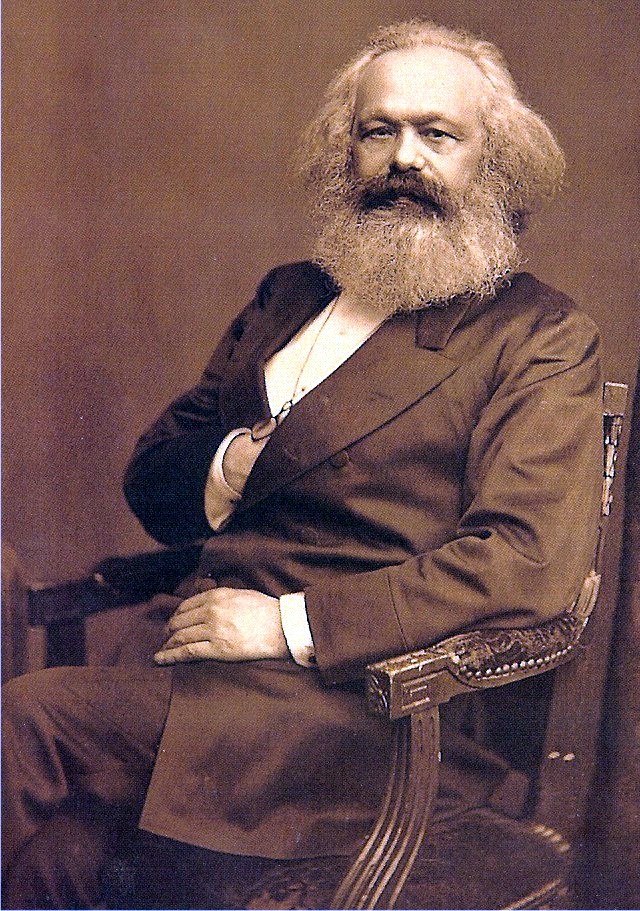
Karl Marx would be happy to know this picture is in the public domain, giving according to its abilities, taking according to its needs.
Dear Karl Marx,
I have a question about blind dates. I haven’t been on the dating scene in a long time, and I’m not sure how to handle things. I’ve heard that the guy is supposed to pay for dinner, but I’m still struggling to get out from under some pretty horrendous student loans, and I can’t afford to be taking out a lot of girls I don’t even know, especially if things end up going nowhere. On the other hand, I don’t want to look cheap. What’s a guy to do?
Signed,
Struggling in the New Economy
Dear Laborer,
It is truly disheartening to hear that even in this day and age the forms of capital are being used as a symbol of control in relationships rather than existing as a means to advance a fellowship of well-being and understanding. Ah, well; such is the way of the world until society is changed. In the meantime, I would advise you to reach out to those of your contemporaries who are of a similar understanding, building those relationships that you can gradually and with time, rather than with displays of bourgeois largesse. Perhaps meet her for a cup of coffee and discuss common interests so you can get to know her as a person; if she truly is a part of the struggle of the proletariat, she won’t mind going dutch.
Thomas Jefferson

We hold this truth to be self-evident: that this picture is in the public domain.
Dear Thomas Jefferson,
I’ve got a serious problem and I’ pretty sure only you can help. I was at a party a few weeks ago, I got kind of drunk, and I ended up hooking up with this girl. Thing is, she wasn’t my girlfriend. I feel awful about it, but I don’t know what to do. I haven’t told my girlfriend about it, and I’m wondering if I should. I really love her, and I think she’d forgive me, but would it be right?
Signed,
Too Much Southern Comfort
Dear Southern Man,
When you choose to overindulge in spirits, there is a race to determine whether you run out of wisdom or honor first; the only certainty, as you have found, is that you will lose. In this instance, your impulse to unburden your conscience to your long-suffering significant other is not one born out of compassion, but rather one of guilt and further self-indulgence. The only course of action open to you at this point is to bear the knowledge of your misdeeds alone; keep your own counsel on this matter of impropriety, and let history be your judge.
Sigmund Freud

Sometimes a cigar is just a cigar, but this photo is always in the public domain.
Dear Sigmund Freud,
I’ve been with this girl for a while now, and things are getting pretty serious. I’m starting to think she might be The One. But how do you tell? I mean, I’m talking about making a commitment for the rest of my life. How can you be sure about something like that?
Signed,
Ready to Make the Leap
Dear Superego,
It is understandable that you are hesitant about such a major life change, and decisions of such gravity bring a great deal of internal strife to everyone. Before settling on a course of action, explore your motivations; consider what might be driving you to take your relationship to this new and deeper level. Is it this girl in particular that makes you feel ready for a lifelong commitment, or are you simply responding to a suppressed need yet unfulfilled? While you’re at it, take a good look at her mother, because that’s what you’ll be married to in twenty years.
Abraham Lincoln

Public domain.
Dear Abraham Lincoln,
I’ve been married for a few months now, and I’m worried our life has gotten to be kind of routine. I want to mix things up a little bit, try to get “out of the rut”, but I’m not sure how. Do you have any suggestions of some fun, adventurous things we can do together?
Signed,
Looking for Adventure
Dear Citizen of the Republic,
While I certainly respect and admire your desire to preserve the union you have with your wife, I wonder if you have given full thought to the many options available to you. While the drive for glory may seem attractive now, it soon pales before the simpler pleasures of hearth and home. May I suggest instead a special night in? Cook your new wife dinner; make some light conversation; perhaps a game of charades. Going out on the town is overrated.
Napoleon Bonaparte

Public domain.
Dear Mr. Napolean,
I had this guy I really liked and I thought he liked me to and I had a friend who was supposed to ask him if he liked me so I could find out if he liked me like I liked him but instead she asked him if he liked her and now they’re going together and I’m sad. Even worse all my other freinds arent talking to me because I said she was a poopyhead. What should I do?
Your firend,
Jenny
Dear Mademoiselle Jennifer,
I also understand the pain of betrayal; to feel as if you are the emperor of the world one moment and a mere exile from all that you know the next. But fear not! With sufficient effort and planning, you can stage a coup d’etat against those who rule your current circumstances, and once again take your rightful place in your social circle. Make use of what you know about those who stand against you, and do not hesitate to spread their most shameful secrets to the world. Press your advantage ruthlessly, and crush them utterly. Do not forget that this is war; you do this not out of revenge, but to teach a lesson to others who might be tempted to stand against you, and to prevent further battle in the days to come.
Confucius

A true gentleman would know this is in the public domain.
Dear Confucius,
There’s a girl I go to college with that I’d really like to get to know better. We take a few classes together, but I haven’t gotten up the nerve to ask her out yet. I’m not sure if she’d be interested in me, and I’d be devastated if she turned me down. Should I go for it, or should I just try to stay friends?
Signed,
Pining Away
Dear Junzi,
It is well that you are in college, for the pursuit of knowledge is in itself a part of the path of virtue. It is however only one part; self-knowledge, the cultivation of virtue, and filial duty also play their roles. If you are a true gentleman, what woman would refuse you? You say you have classes in common; surely that is something you can use as a place to start a meaningful interaction. Failing that, try taking her father out for a round of golf.
Campaign Silence Reform
Posted: September 28, 2012 Filed under: Politics | Tags: America, campaign finance reform, Citizens United, freedom of speech, politics 5 CommentsThis has been a particularly loud year for the “get money out of politics” crowd. Certainly the Citizens United decision didn’t do much for them, but I have to admit I’ve never understood the big push to get money out of politics in the first place. Setting aside jokes about an honest politician being one who stays bought, the reasoning behind trying to get money out of politics seems to be, as I understand it, that rich people will simply buy influence and we lesser folk will simply be ignored.
I’d like to explore how that works two ways. First, let’s consider a world in which we don’t allow anyone to donate at all to political campaigns. After all, money doesn’t equal speech, right? So no need to let anyone donate to any candidate. But then does that mean candidates only get to spend their own money? How does that stop rich people from just buying elections directly? Unless we want to stop them from spending their own money to express their own personal views, and that’s a case where I don’t think I’m conflating money with speech, I’m conflating “speech” with “speech”.
And what about the newspapers? Do we silence them as well? Do the editorial boards get to keep endorsing the candidates of their choice? Or do they have to rely on silly work-arounds, perhaps offering “report cards” for each candidate on the issues, making it clear that one candidate gets straight “A”s and another nothing but failing marks, but we’re not endorsing anyone! Either way, what’s to stop the wealthy or corporations from buying the newspapers and TV networks (like they haven’t already) and pushing the agenda of their choice (sounds like a pretty foxy idea, wish I had thought of that…)?
So if we can’t shut out the rich and the news, do we only shut out “the lower classes”? That’s what we’ve been trying to avoid, isn’t it? Then perhaps the alternative is to simply allow anyone who wants to donate to contribute as much money as they want, but we put it all into one big pot of money, and then the money gets distributed evenly to anyone who wants some. Aside from the question of “who’s a legitimate candidate” (that’s like defining legitimate rape), even if you managed to answer that you’d end up with money from a dedicated feminist supporting Todd Akin and money from a neo-Nazi going to support Al Sharpton. Public financing of campaigns is basically the same idea only worse: people don’t even get to decide if they want to play (or pay) at all.
The other problem with the “big pot o’ money” approach is the issue of bundling for impact. Sure politicians care what you say, as long as your opinion comes wrapped in a check, and the bigger the check the bigger your opinion, which is what started us down the whole path in the first place. If you don’t believe that, then you should have no problem with rich people and corporations donating as much as they want to any politician at any time, because it doesn’t matter. If you do believe it, then you are faced with the issue of lots and lots of little people trying to get their voices heard individually… or gathering together as one to have some real impact. Sure, the rich people can do the same thing, but they don’t need to, or at least, they don’t have as much need to. So what you end up with is a classic Catch-22: either money doesn’t influence politics, in which case we don’t need laws to stop money from being in politics, or money does influence politics… in which case we don’t need laws to stop money from being in politics. When you hear a politician calling for “getting money out of politics”, it’s usually one of two major choices: an incumbent who benefits over challengers from “campaign finance reform”, or some “outsider candidate” who is having trouble raising money. Like anything else, check the incentives before you go thinking this is altruism or any sense of “for the public good”.
Ever since I can remember, money and politics have gone together like sex and teenagers: “it’s a problem”, “it’s an epidemic”, “it’s ruining our society”, and as far as I can tell from my own limited experience, it’s a non-issue. As best as I can tell the real fear isn’t that people will make a choice they didn’t want to make, or (like this never happened) an uniformed choice, the real concern is that people will make the wrong choice. By what standard? Well, that’s really a matter of opinion, isn’t it? When I hear someone calling for campaign finance reform, what I most often hear them really saying is “other people are idiots but I’m not.”
Anarchy X: The First Commandment
Posted: September 26, 2012 Filed under: Anarchy X, Culture, Politics | Tags: America, Anarchy X, First Commandment, religion, Ten Commandments 5 Comments“Thou shalt have no other gods before me.”
Before I get rolling on the whole Ten Commandments thing, I need to make a few clarifications and disclosures. First, for the record, I am not a member or believer in any Judeo-Christian religions or traditions. My personal beliefs (or lack thereof) are not relevant to the discussion at hand, except insofar as to establish that I am not speaking as a believer. Second, I was not raised “in the Church” as it were, but my parents didn’t keep me away from it either, and my sister and I did go to Sunday School whenever we wanted. My parents let us find our own beliefs, and I grew up with the King James Bible, so that’s the version of the Ten Commandments I’ll be looking at.
Now that I’ve gotten all of those provisos out of the way, let’s move on to the easy stuff, shall we? I mean, unlike the Bill of Rights the Ten Commandments are pretty straightforward, right? Well… actually no. Setting aside any controversy about their use, the Commandments themselves have a long and interesting history of not being as clear as they could be.
For this first commandment, what throws me is that I hear a lot of people try to defend the idea of “One True God” using this, even though a proper reading of this Commandment doesn’t lend itself to any such interpretation. Far from it; every reading I can make of it suggests multiple gods, in multiple possible configurations. If you are willing to completely abuse the English language I suppose you could make that reading, and I’ll include that one in order to let folks judge it for themselves, but I’d love to hear someone explain to me how you honestly get to a non-tortured version of “one god” from this.
So here’s what I’m reading: “Thou shalt have no other gods before me”; sounds like an acknowledgement of other gods. How to interpret that in the context of Judeo-Christian belief? Like so:
Polytheism – Reading it as “there are many gods, I am just the most powerful and most deserving of worship.” You can actually envision a full pantheon of deities that includes one superior figure demanding to be held in full respect above the others quite easily. Odin All-Father, Zeus, or even Osiris (before that whole death-rebirth thing, but that’s a whole other Christian mythology comparison) could handily fit into this role, although in fairness I don’t see this being likely in the full context of the other writings and material around the Commandments.
Kathenotheism – Reading it as “there are many gods or spirits, I am just the most powerful/the others are simply aspects of my glory.” While it would take a little bit of stretching to get it within either the strictest bounds of the definition of kathenotheism or else the strictest interpretation of the Commandment, I still think it takes fewer mental gymnastics than the idea of using this to support monotheism. So imagine it with me: there are still gods or spirits of fields or seasons or what have you, but they are all subservient to the One True God. This isn’t strictly polytheism in that a migrating/herding culture would only worship one subservient spirit at a time and would still always be worshiping the highest deity as the supreme being. Another possibility would be seeing each of these lesser spirits merely as manifestations of the One True God, which takes us into functional monotheistic territory, but is still very different from what is typically described as the monotheism that is derived from the Ten Commandments.
Henotheism – Reading it as “Maybe there are other gods, maybe there aren’t, but I am YOUR god, and there aren’t any others worth bothering with.” This is the one that I think is most likely, and I think a lot of scholars have probably trod a lot of this ground already to be perfectly honest. Henotheism basically is the idea “I worship my god, you worship yours”. Henothesists don’t deny the existence of other gods (or at least the possibility of them), the just don’t particularly care. Considering the origins of Judeo-Christianity in a part of the world that had multiple other, older, much stronger pantheons in existence, I find it difficult to believe that any new religion would have evolved and declared right out of the gate “oh, and by the way, no god exists except for the one we worship, and it’s not the fantasy creatures you’ve been making sacrifices to, because seriously? Animal heads?” Having the stones to say “my god can beat up your god” when you’re on the wrong end of the slave lash is already pretty impressive.
Monotheism – Reading it as “There are no other gods. I am the only one. Don’t notice the man behind the curtain.” As promised, I shall now explore this possibility. While as previously mentioned I find it difficult to believe any new religion would declare right out of the gate that everybody else’s beliefs are completely false, it’s not like it hasn’t happened before in history, so that’s not a complete stopper. The big issue I take with this interpretation is that it doesn’t make sense in terms of the text. If you drop the last clause entirely the Commandment becomes “thou shalt have no other gods”, which is what the assertion of monotheism is. The existence of that clause has to be accounted for, and it can only happen one of two ways, either temporally or through precedence. I’m fairly certain there is no one making the argument that the tribes that eventually became the people of Jerusalem had no religion of any kind before the events described in Exodus. So then the only remaining possibility (as I understand the proper use of the English language) is one of precedence. One does not have to acknowledge that other gods DO exist, only that if they did, they wouldn’t be worth bothering with (see Henotheism above).
I realize that invoking “the usage of the English language” in this case is pretty weak considering the number of translations that the source material has been through, but as long as people insist on using interpreted texts as the basis of their arguments and politics, I’m going to be a stickler. And that’s what it’s all about in the end for me: there are people in America who rely on the Bible to make political decisions, and even want to hang the Ten Commandments in public spaces. But these same people have radically different interpretations of what these texts mean, not just in terms of their personal beliefs but the public sphere as well.
Consider for example my most-likely interpretation of this, what may fairly be considered from a religious perspective the most important Commandment (hence why it comes first): the henotheistic perspective says there may or may not be other gods, but they aren’t worth worrying about. “I worship my god, you worship yours”. Sounds so perfectly American. Shoving your beliefs in the public square and insisting “that’s what America was founded on, and you should thank us for it”? Not so much.
Special Bonus Post!
Posted: September 25, 2012 Filed under: Culture | Tags: culture, entertainment, guest post, travel, travel advice Leave a commentMany thanks to the ladies over at Heels First Travel for having me do a guest post! Check it out now, and be sure to check out all of their great travel advice!
Go ahead, I’ll still be here when you get back.
How To Get Ahead In Business If Your Boss Is Anything Like Me
Posted: September 24, 2012 Filed under: Culture | Tags: business, culture, etiquette, how to get ahead, job advice, workplace 3 CommentsSomehow, despite all my worst efforts, I’ve ended up supervising quite a few people over the past several years, as well as observing more than a few more come through this and other companies I’ve worked at. Between this and my own personal experiences (read: “the horrible mistakes I made and all the advice I never listened to just like you will not listen to me”) I’ve come to realize there are certain common traits that separate the people who will continue to advance and thrive from the people who will simply drift from one meaningless job to the next, only to inevitably end up complaining that the world isn’t fair. In order to empower you and prevent you, dear readers, from becoming one of those benighted souls, I offer these insights I have gleaned from my years on both sides of the managerial fence.
I Know It’s Boring, Just Do It Already. Here’s a little wake up call for you, sunshine: if your job weren’t 90% suck, I wouldn’t have to pay you to do it, you would do it for free. If it were 90% fun, YOU would be paying ME. So please, stop telling me how much the work I’ve given you sucks/is boring/is beneath you/is a waste of your time/skills/degree/god given talent/I honestly don’t give a rat’s ass. The simple fact is, the people who do what I ask them to do, do it well, and don’t complain are the ones I will come to when I need something else done, including the fun projects, and the complainers are the first ones to get cut when the budget axe comes down.
My Job Is Boring, Too. Bet you didn’t see that one coming, did ya? Yeah, cupcake, here’s the reality of the workplace: the reason I gave you all that boring stuff to do is so I could have time and mental capacity to focus on my own load of boring stuff. See, I have more experience, more institutional knowledge, more work relationships, and more understanding of how to get things done. That means that for every boring project you’re working on, I have three, only I don’t get to see them through to completion. Instead, I have to nurse them along just far enough that I can hand them off to someone else that I can only hope will bring them through to completion in a manner I find satisfactory, because if they don’t then I get yelled at for their failure. That’s called responsibility, and it’s what I really get paid for.
Take Responsibility. The people who get promoted are the people who get things done. If you can’t, come to me before the deadline and before you run out of money so we can come up with a solution. This makes you look like a problem solver. Why you didn’t get the project done on time, on budget, after the fact, is of no interest to me.
Do It Right The First Time. I shouldn’t have to say this, but somehow I do. I can’t count the number of people I have had to train in the simple fact that details matter. It’s not just about the task at hand, this goes to my overall perception of you. It’s like this: when I have a new project of critical importance, who do you think I’m going to give it to: the guy who treated his last project with a shrug and a “whatever” attitude, or the one who treated it like his job depended on it? Even if the project at hand is simple data entry, the next one might not be, and how you do on this one will shape my perception of how you will do every other task I give you.
This Isn’t Social Hour. Maybe you heard that “networking” was the way to get ahead. Maybe you never grew out of chatting with your friends in high school. Maybe you’re just naturally gregarious. Whatever it is, if every time I see you I see you talking to someone instead of getting something done, that’s the image I have of you. That’s not to say you can’t be sociable at work, but it is to say that you need to understand why you’re there, and socializing isn’t the number one reason. It’s not even in the top five.
Innovate, Don’t Inundate. Truth is I’m always open to a good idea. I welcome them. The problem is that everyone, and I mean everyone I’ve seen come into a new company throws out a new idea within a week of starting there. I’ve done it myself. I guess the urge to impress your new boss is just too strong, or maybe we all just feel like “Well, they hired me for a reason.” The problem is this is the height of hubris. This presumes you understand the company and position you are in so well within a week that your idea will have merit and strength sufficient to be worthy of consideration and implementation. Now take this hubris and multiply it by the number of ideas you’ve thrown out in the amount of time you’ve been at your current job, and divide it by the number of months you’ve been there. For most people who have been at a job for less than a year, this ratio will be roughly “holy/shit!” Even if there’s a good idea in there somewhere, I’m not going to notice it because I’m too busy ignoring everything you say. Wait for the right idea to come along, put it out there, and let others decide its relative merit.
Be Patient, And Have Realistic Expectations. There’s a great line in Fight Club that I think we can all learn from: “We’ve all been raised on television to believe that one day we’d all be millionaires, and movie gods, and rock stars, but we won’t.” I take a different lesson from this than the movie intended, but I do take a lesson away from it, and I hope you will to: you can have the corner office, you can have the six figure salary, you can have the respect of your peers and the adulation of the masses… but you won’t have it today. Tomorrow’s not looking good either. You’re gonna have to work your way up to them, slowly, bit by bit, and even once you get there, if you get there, there’s no guarantees there will be anything more beyond it – or that it’s even what you wanted in the first place. Life’s like that. So think about it, now and along the way. Be sure you know what your options are, and know what you’re giving up, because there are damn few second chances, and nobody gets a third.
Don’t Tell Me Not To Not Vote
Posted: September 21, 2012 Filed under: Culture, Politics, Uncategorized | Tags: America, politics, voter turnout, voting 5 CommentsIt’s that time again. Once every four years we see millions, nay, billions of dollars wasted on pageantry, spectacle, and foolishness. It’s not just the direct participants who throw their money away either, as every big corporation in the world wants in on this gravy train, even though the truth is most of them will never make their money back. But what the heck, the people do love their bread and circuses.
Oh wait, they made the Olympics every two years, didn’t they?
Well that’s okay, the people still get their Leap Year frivolity in the form of our presidential elections. Once again I am hard pressed to find much if any difference in the offerings on the left and the right, and I am astounded by the fervor with which others are approaching the coming election. I could sooner see for getting worked up over a table tennis match (that is still an Olympic event, isn’t it?) But that’s not what bothers me the most. What bothers me is when people find out I have no intention of voting and then they say something offensive like “if you don’t vote you can’t complain about the way things turn out.” Yeah, I said that’s offensive. Not just idiotic, but actually offensive, and I’ll explain why.
Consider what the average voter turnout is in our country these days, or even over the last twenty years (about as long as I’ve been voting.) Does it still hover in the mid-thirty percentile range? So roughly one-third of eligible voters are actually ready, willing, and motivated enough to go to the polls and let their voices be heard. And is it the responsibility of our civic leaders to inspire us to want to vote? Is it the duty of our elected officials and candidates to office to give us reasons to invest the time and effort, as little as it might seem to some? Is it perhaps the obligation of those who hold the power in the land to find a way to cut through the malaise and disillusionment and reach to the best part of each of us?
No. It seems that the fault, dear Brutus, lies not in our politicians but in ourselves. If we don’t pull the switch and vote for either A or B, we don’t get to complain there was no option C. And even if there was an option C, if we aren’t satisfied with that one, we don’t get to complain about that unless we pull the handle for one of the above. And that’s the problem with the whole system and those who give that simplistic response. There is no option for “none of the above” (a la Brewster’s Millions). In this “damned if you do/damned if you don’t” scenario, you’re either part of the problem or you’re part of the problem.
The message that these people, and our Most Beloved Leaders in both parties, aren’t getting is that there’s a lot of people who are dissatisfied with the entire system. I don’t mean to say they’re dissatisfied in the same way I am (that would be its own brand of hubris); rather they are, each and every one of them, dissatisfied in their own unique way. The only thing we all have in common is that we don’t like any of the options we’re being presented with well enough to vote for them, nor do we dislike them significantly less than the other options. Given a choice between a shit sandwich and shit soufflé, I’ll just go hungry, thanks.
But the system is rigged. There’s no way to step in the booth and say “a plague on both your houses.” The only options available both suck. The first is the one that is hinted at ever so obliquely by the people above, who don’t want to come out and say what they really mean because even they realize how terrible the truth sounds: “If you don’t vote you’re powerless. You don’t have a voice of any kind. Nobody in power takes you seriously. You may only get crumbs of what you want when you vote for the guys they offer, but if you don’t vote at all you get nothing.”
Option number two is to be out in the cold, ignored except as part of a statistic that is used by the nightly news and each party to bash each other over the head, when they’re not busy trying to shame all of America one generation at a time. “Why aren’t Americans voting? It’s a travesty! It’s a tragedy! It’s somebody’s fault who isn’t me!” “The young aren’t voting! The old aren’t voting! The [insert group that is more likely to vote for politician who is currently speaking] vote is being suppressed!”
Here’s a crazy idea. How about next time we decide to elect anyone for anything, we just have one election. One person, one vote. And we have it open for a week, twenty-four hours a day, so there’s plenty of time for voting. Only here’s the catch: there’s no pre-filled voting cards. No letters next to names. You step up and write down the name of the person you want to vote for. Get rid of the parties and see what happens.
I wonder.
Anarchy X: The Tenth Amendment
Posted: September 19, 2012 Filed under: Anarchy X, Politics | Tags: America, anarchy, Anarchy X, Bill of Rights, Commerce Clause, Constitution, James Madison, politics, states' rights, Supreme Court, tenth amendment 1 Comment“The powers not delegated to the United States by the Constitution, nor prohibited by it to the States, are reserved to the States respectively, or to the people.”
In many ways I consider this to be the red-headed stepchild of the Bill of Rights. Nobody really wants it except when they do, and the only time they want it is when they want to use it as a weapon against somebody else. It only exists as a means of quieting down people who were nervous about centralized power, and since then it’s done little to no good despite the lofty goals it was originally envisioned to provide for.
The original purpose of the amendment was, as James Madison phrased it:
[F]rom looking into the amendments proposed by the State conventions, that several are particularly anxious that it should be declared in the Constitution, that the powers not therein delegated should be reserved to the several States. Perhaps words which may define this more precisely than the whole of the instrument now does, may be considered as superfluous. I admit they may be deemed unnecessary: but there can be no harm in making such a declaration, if gentlemen will allow that the fact is as stated. I am sure I understand it so, and do therefore propose it.
Considering that within the twentieth century we were witness to Supreme Court cases that allowed the federal government to decide how much wheat you could grow on your own land for your own personal consumption (Wickard v Filburn), your house can be taken for private use (Kelo v City of New London), and the federales can kick in your door and snatch up your medicinal marijuana crops, even if it is legal to grow and use in your state (Gonzales v Raich). And these are all just abuses of the Commerce Clause, but I’ve harped on that one before. What I find far more interesting is the abuse of the other side of the equation.
The concern, as I see it, that was being addressed by the tenth amendment was not one of states being able to retain the powers they had enjoyed up to this point. Rather I think it is, as Madison points out, a continuation of the thread that runs throughout the Constitution and the rest of the Bill of Rights: people who had fought to free themselves from what they perceived to be an aggressive, oppressive regime and not wanting to re-create it in the new government they were now defining. One of the chief concerns and problems they had seen was that, being so far away from the seat of power, their concerns were not addressed and their complaints were ignored, and they believed that their local (and by extension state) governments would be more responsive in the event that government action would be needed at all (hence that little clause at the end “or to the people”).
This was never intended to be a carte blanche for state governments to violate the rights of citizens where the federal government couldn’t, and yet so many times that is exactly how some groups have attempted to interpret it. Waving the banner of “states’ rights”, they have tried to circumvent laws and statutes they didn’t like, usually ones that were intended to protect the rights of minority populations. While there are those who attempt to argue the historical implications of the North versus the South and economic issues that extend beyond slavery (some of which does have validity), the core of the issue was that Southern states wanted slavery and Northern states didn’t. This has come forward to us through the years as Jim Crow laws, “separate but equal”, and other forms of government imposed racism, which are times when federal power should intervene to protect the rights of minority populations against the will of the majority in a given area.
Unfortunately this same sort of abuse flows downhill in many ways; states use their power to impose all sorts of laws on their people, such as smoking bans, labor laws, property usage laws, and other means of restricting the free use of property and control over one’s own body. These laws can be and often are popular in the localities where they are passed, or at least popular enough with a large enough majority of the citizenry for that given issue (hence the phrase “tyranny of the majority”). Unfortunately there doesn’t seem to be as much of a groundswell from either the left or the right as yet to protect against these abuses.
I believe the original intent of the tenth amendment was to try to bring power closer to the people. The idea was that each state would have a limiting document similar to the Constitution (as I believe they all do) that was decided upon by the people of that state; by bringing power closer to the people, it would be more responsive, but also the limits on state power would have the same effect as the limits on federal power. This recursive limitation would flow down the chain of government power, so that ultimately the people would have power over themselves. Instead what we are finding is a constant tug of war between government actors at the state and federal level to determine who gets to make the decisions about our lives, whether any given action falls under ” powers … delegated to the United States by the Constitution” or those ” reserved to the States respectively”. Somewhere along the line the last bit about “the people” got edited out.
Finding Strength through Adversity
Posted: September 17, 2012 Filed under: Culture, Humor | Tags: advice, comedy, culture, etiquette, humor, life, philosophy 2 Comments“Life’s not fair.” These are the words of wisdom my mother greeted me with every time I was a child and I had a complaint about some new injustice that had been visited upon me. (To be fair, I preferred this to her more often used “go play in traffic” or “take a long walk off a short pier”, but I digress.) I have since come to understand that in her own Long Island way she was trying to toughen me up and prepare me for a cruel and uncaring world. (I think. I’m still not sure about the traffic thing.)
Since then I have had good days and bad days, and then I have had “Oh dear GOD seriously WTF?!?” days. These latter have reminded me more than once of mom’s admonition when I was a child, and after I got done playing in traffic, I would then remember that she also had other important life lessons to share and try to find strength through the adversity. There are certain key things I have since found that, by keeping them in mind, have helped me to get through even the most trying of days.
Some days are just going to suck. Accept it now. This may not seem comforting, but the truth is it helps. Once you accept that there is nothing you can do about it, that the cards are all stacked against you and fighting against it is simply a waste of time and energy, it becomes a lot easier to just go with the flow. That’s not to say you should take individual events lying down; rather just that you need to accept that today is going to be “one of those days”, and not try to somehow make it a good one.
It’s not personal. Even when it feels like the entire universe has singled you out to be picked on today, chances are that’s not the case (and if it is, I strongly suggest you give Ashton Kutcher a good shot in the mouth when he jumps out to tell you “you’ve been Punk’d!” So has your career, Ashton.) Most of the people around you who are getting on your nerves are just trying to get through their own mediocre-to-awful day, and I promise that they are not trying to make your day worse, so taking it out on them will not help… no matter how good you think it might feel.
Taking it out on someone else will not make you feel better. Since you have the discriminating taste and class to read this, I am assuming you’re not a raging asshole, so I feel safe in making this prediction. In a heated moment you might think you’ll get some satisfaction in making someone else pay for adding to your already steaming pile of a day, but in all likelihood you’re just going to walk away feeling a little worse for having gone off for no good reason. You’re also going to leave them with a bad impression of you, which is likely to make tomorrow (or a future day) worse, if they don’t just decide to serve their revenge piping hot.
There’s nothing wrong with treating yourself. I don’t mean to endorse over-indulgence here (I prefer to endorse that all on its own), but when things are already in the toilet, why put yourself through the added misery of denial? Treats are just that, and sometimes you need one. Have some ice cream. Pour a glass of wine. Go see a movie. When the world refuses to cut you a break, cut yourself a slice of pie.
That’s what friends are for. Real friends aren’t the people you go drinking with when you are in a good mood. They are the people you call when you need to complain about your bad mood. Great friends are the ones who take you out drinking so you can complain about your bad mood and then pick up the check.
Every day ends. No matter how bad it gets, no matter how long it feels, the one redeeming virtue of every bad day is that it only last 24 hours. Even if the bad carries over into the next day, there’s always the chance that this new day will only be mediocre rather than a true crapfest. And even if things don’t improve, the new day is still only 24 hours long.
Wait for “the cherry”. You’ll know the cherry when it happens: that last, little thing that isn’t nearly so bad as the rest, more of a finisher, the topping that just says, “And now your shit sundae is complete.” Once you have experienced this transcendent moment, you can at least start to look forward to the inevitable dénouement to the dramarama your day has been thus far.
There’s always tomorrow. Yes, it’s cliché, but clichés exist for a reason. This one exists to remind us that so long as we live, there is a chance of some good balancing out the bad, and even if life isn’t fair, that doesn’t mean it can’t get better.
 . And be sure to leave a review with your not so humble opinion!

 My Not So Humble Opinion