The Perils of Big Data
Posted: November 4, 2013 Filed under: Culture, Humor, Satire | Tags: big data, Boy Scouts, BSA, comedy, culture, humor, NSA, satire Leave a commentWASHINGTON, DC – The NSA announced today that, working in cooperation with several other branches of the Department of Homeland Security, they have managed to identify a massive underground homegrown terrorist organization here in America. This organization has been active for decades, secretly working to recruit and train operatives in survival skills, weapons training, and small unit tactics to some unknown purpose. Speculation has it that high-ranking and long term members of this elite organization have even managed to infiltrate our very government, even to the highest levels. They go by the code name “The Boy Scouts”.
These individuals can be identified by the highly stylized “uniforms” they wear, as well as their ritualistic chants and secret signals. They reward members with recognition for completing missions and earning “merit badges”, as well as attempting to ingratiate themselves into the wider community. Sleeper cells have been found across the United States and even in other countries. Radio and internet chatter has been picked up about some sort of mass gathering code named “Jamboree”.
They support themselves through private high-pressure collections in local areas, taking “donations” and “selling” door to door, an obvious front (because really, who even buys popcorn kernels anymore?) Their primary targets for recruitment are boys between the ages of 13-18, although they are believed to have an affiliate group that targets younger boys, as well as a sister organization that targets females and has a much more successful fundraising operation dealing in highly addictive narcotics.
If approached by one of these “Boy Scouts”, citizens are advised to remain calm and move away slowly. Their primary goal at this time seems to be focused on recruitment of young men, except for homosexuals.
The Day After
Posted: November 1, 2013 Filed under: Culture, Humor, Musings | Tags: comedy, culture, halloween, humor, life 3 CommentsToday is the day after Halloween, and we all know what that means.
(“The start of Diabetes Awareness Month?”)
Close, but no. It means that we’ll all be eating lots and lots of candy. Whether you’re a parent sneaking the best bits out of your kids’ hauls or, like me, you’ve got the dregs of what you couldn’t give away on The Big Night, there’s plenty to go around. Temptation will be everywhere for weeks to come, as everyone brings the sweet treats everywhere they go in a desperate attempt to pawn them off on others rather than suffer through the sugar shock of being stuck with it themselves.
Personally I’m in a different boat than I’ve been in before. First I had to miss out on the trick-or-treaters because I had class, which I deeply regret since that’s my favorite part of the holiday. Even more than Christmas I believe Halloween is for children, and seeing them come to my door and beg me for sugar so that I can send them laughing maniacally into the night and leave their parents to suffer with their sugar-crazed fiends for the next several weeks warms my cold, cold heart. Apparently we had quite the bounty of them last night as well, which is why we have so little left over candy, which is both a good thing and a bad thing.
It’s a good thing, because lord knows I don’t need any more candy lying around the house, and as I already mentioned there’ll be plenty around work and elsewhere for me to get my fill. It’s a bad thing because this is the first year I had almost complete control of the candy buying in my household, and My Not So Humble Wife and I agree on candy in general anyway, so it wasn’t an issue. You know what I’m talking about: that one guy who insists on buying The Shitty Candy.
I hate that guy so much. There’s so many things wrong with that. First and foremost is that I’m forced to give out The Shitty Candy to the kids who come to my door. Setting aside the very real possibility of an unsanctioned home delivery of eggs and toilet paper, there’s the simple fact that I have a reputation to protect. I want to be the guy who gives out The Good Candy, nay, The Great Candy, and in great heaping handfuls. So I have to do my best to avoid having The Shitty Candy dumped in the bowl, but inevitably we either run low or (worse) when I’m not looking Shitty Candy Guy starts pouring it in, and he ALWAYS mixes it up. SO then I have to rummage around and try not to give it out, but the kids see me rummaging around, so if I accidentally give them a piece of The Shitty Candy, it looks like I did it on purpose, and I become That Guy.
The next worst thing is the day after, when we have to start eating the leftover candy. (Throw it out? I know each of those words, but your sentence is meaningless.) Despite having insisted on buying The Shitty Candy and handing out The Shitty Candy, I notice he never bothers to eat The Shitty Candy, at least not at first. He always goes straight for the leftovers of the stuff that I bought – you know, The Great Candy. This offends me, not because The Great Candy tends to be more expensive (c’mon, this stuff is like five bucks a bag), but because the whole point of Halloween candy is what it says about you as a person. Are you a Milky Way guy? Are you a Junior Mints kind of gal? Or are you one of those Mary Jane weirdoes? (If you give away Werther’s at Halloween, you deserve what you get.) Eating the leftovers is the reward or punishment for the choices you made, and going straight for someone else’s Great Candy is Halloween identity theft.
This year, I might have missed out on the trick-or-treaters, and I might not have much in the way of leftover candy, but what I do have left is nothing but Great Candy. And that’s worth 100 Grand.
Top 10 Reasons Washington, D.C.’s Pro Football Team Name Is Offensive
Posted: October 30, 2013 Filed under: Culture, Humor | Tags: comedy, culture, D.C., entertainment, football, humor, Redskins, sports, Washington Leave a comment10. Russet potatoes feel left out
9. “Wounded Knee” should refer to historic battle, not Robert Griffin III
8. “Pox Ridden Blanket” Theme Night not a big success
7. Other minorities don’t have major league sports teams named after their favorite ethnic slurs
6. Can’t be called the home team because “we were here first”
5. Team owner Dan Snyder insists on referring to season tickets as “reservations”
4. Stadium concessions stands refuse to accept beads and animal skins as currency
3. Tribes can’t scalp… tickets
2. D.C. allows casinos, but won’t put one in the stadium
1. Polls show Native Americans don’t want to be associated with the Federal government
Escape from Modernity
Posted: October 28, 2013 Filed under: Culture | Tags: culture, entertainment, movies, pop culture, society 2 CommentsRecently I was listening to the radio (okay, I was in the car and I happened to have the radio on) and I heard an interview with director Randy Moore about his new satire Escape from Tomorrow. It was the first I had heard of the film, which is not terribly surprising since I’ve never really been a film festival kind of guy, but I think I may end up seeing this one. It’s not that I have anything personal against the Big Mouse, it’s just that I think he made an important point in this article:
“Branding is so much a part of our culture, and it’s everywhere. And (Disney) is everywhere. They’re so ubiquitous, you can’t get away from them even if you tried… To not be able to comment or critique or parody that (ubiquity), I just think it’s morally unacceptable.”
However, in the interview I heard he also made another point that, while I think it’s important, makes me feel he missed the mark somewhat by targeting Disney specifically. He said (and I can’t seem to find the interview online, so forgive me for paraphrasing) that the theme of the film is that you can’t be happy all the time. I think that’s an excellent point, especially in an age and culture where we have lost sight of the idea of contentment and we are constantly being sold happiness in its stead. I believe Dennis Leary put it best in his stand-up routine No Cure for Cancer:
“Happiness comes in small doses folks. It’s a cigarette butt, or a chocolate chip cookie or a five second orgasm. You come, you smoke the butt, you eat the cookie, you go to sleep, wake up and go back to fucking work the next morning, THAT’S IT! End of fucking list!”
So yeah. While there’s something to be said for taking a few shots at (as Moore describes them) a “ubiquitous” company that specializes in selling happiness, I think there’s something he loses sight of: Disney is only selling what we’re buying. Yes, Disney Theme Parks™ are the Happiest Place On Earth™ (made so, I have been told by a former employee, by sucking all the happiness out of their employees, powdering it, and then sprinkling it over the park; that’s your “fairy dust”), but they don’t force anyone to go there and then whistle Zippy-Doo-Da out of their assholes a-la Clark Griswald. I think there may be more to be found in making a movie that critically examines a culture fixated on perpetual bliss, rather than the companies that strive to provide it.
Which is not to say those companies deserve to be completely let off the hook; they are a part of the culture, they help make and drive that culture, and they deserve a certain amount of grilling in the space of exploring that culture. But to single out one company for catering to the desires of people to have happiness is akin to blaming one company for Americans being obese.
Twisted Word Games
Posted: October 25, 2013 Filed under: Culture, Humor | Tags: culture, entertainment, fun, games, humor, word games 2 CommentsHere’s a fun little something to do the next time you’re bored. I seem to recall at least one version of this coming from a fantasy novel (and extra happy points to the person who reminds me which one it was), but I’ve also run into people who have played some variation of it who never read any fantasy novels, so obviously the idea has spread, assuming it didn’t originate elsewhere.
The first version I like to call “Bring Me Three Nouns”. Here’s the setup: pretend you’re in a war camp of some kind, and you’re interrogating a prisoner. He’s a tough one and he refuses to talk, but for some reason (political, moral, legal, whatever) you can’t just beat the information out of him. Suddenly you have an inspiration. In the hearing of the prisoner, you say to a subordinate “Bring me… He’ll talk.” Replace the ellipsis with three nouns, any three nouns of your choice. That’s all you get to say. What three items would you choose? Something silly, like “a bunch of grapes, a turkey baster, and a pair of headphones”? Something ominous, like “a chainsaw, a smock, and a gravy ladle”? Or just something bizarre, like “a two dollar bill, a pair of tights, and a statue of Carmen Miranda”?
A more restrictive (and in some ways more creative) version of the game is “Object, Animal, Food”. The setup is the same, only in this case you specifically have to name an inanimate object, an animal (living or dead, your choice) and some kind of food (but feel free to stretch the boundaries of any of these categories as far as the other participants will allow). The results can turn out to be as disgusting as “Bring me a box cutter, a weasel, and some raw hamburger. He’ll talk”, or as disturbingly funny as “Bring me a yoyo, an otter, and a lollipop. He’ll talk.” Half the fun is imagining what exactly you would do with this bizarre and motley collection of items (which is, of course, the imaginary purpose of the whole exercise; it’s psychological warfare).
There’s also a deeper level to the game, if you want to explore that far. This game can be a kind of Rorschach test, in that what you suggest can say a lot about you. What do you love? What do you hate? What do you fear? There’s a certain amount of projection that goes into something like this. There’s also a question of boundaries – what’s over the line, what’s too far and too gross to even suggest, if only by implication in an imaginary setting?
On the other hand, there’s nothing wrong with treating it as a free version of “Cards Against Humanity” and letting yourself and your friends run wild without reading anything into it. After all, it is just a game. Have fun!
Oh, and be sure to share your favorite responses in the comments below. I look forward to hearing them.
Blind to Educational Needs
Posted: October 23, 2013 Filed under: Musings | Tags: college, education, higher education, society Leave a commentFor decades, the ideal of collegiate admissions has been to be “blind” to a range of criteria that (theoretically) should be irrelevant to the admissions process, and among those criteria has been the ability to pay. But as a reported by Marketplace, a recent George Washington University student paper report found that school’s admissions office was “wait-listing students based, in part, on their need for financial aid.” The report goes on to cite Joyce Smith of the National Association for College Admission Counseling as saying that more universities are also taking this approach.
So here’s the big question: is this right?
On the one hand, there’s a reasonable argument to be made that, in an economy that fetishizes college degrees and higher education has become mandatory in order to get a decent paying job, requiring students be able to pay for a degree before they enter school is dooming lower income students to a cycle of poverty. The haves will continue to have, and the have-nots will continue to not-have. On the other hand, with the rapid and continuing rise in the cost of higher education irrespective of anyone’s ability to pay (or market desire for the product being produced) resulting in crippling student loans, it’s more than a little disingenuous to suggest there is any equity to be had in admitting students to a school where they will be spending the majority of their income for decades to pay off their education. In that scenario, those who come in with the ability to pay will continue to have a decided advantage; the haves will still have, and the have-nots will simply have debt.
I would suggest the answer is not need blind admissions, but at least (as GW seems to be moving toward) “need aware” admissions, an acknowledgement that simply taking out loans will not be sufficient and that ability to pay must be taken into consideration at some point in the process. Ideally this would factor in financial aid that does not require repayment, such as scholarships and grants, so as to still allow lower-income students an opportunity to access more competitive schools. This should be paired with a discussion about what should be charged for education at schools, as well as what is and is not supported at those schools; as access to higher education becomes more elusive and more expensive this becomes more of a priority.
I also believe part of that discussion should be at least some consideration for stated major intent. Students who plan to spend a significant amount of time and money pursuing a degree that is statistically unlikely to yield a career that will allow them a decent ability to support themselves and repay any loans they needed to take out should be ranked lower. Perhaps that seems cruel, but I have seen too many students who already come out of universities without the necessary skills to succeed in business; if someone wants to spend $35,000 and up on a Master’s degree in Puppetry they may feel free to do so, but at some level we need to at least take into account the very real possibility they will not be able to get paying work at all, let alone sufficient to repay the loans they have accrued. Giving them sympathy for staging protests in the park doesn’t help; giving them some sense of market demands actually might.
Speaking of market demands, part of the problem here is the incentive structure, and I’m not just speaking of the incentive to get students to take on debt. The incentives to get students to apply just to reject them in a bid to look “selective” is ridiculous, but it’s all about gaming the system. We need a better way of ranking schools. Here’s one: perhaps we should come up with a rating system that judges schools based on the percentage of their graduates who graduate within five years, have a job within two years of graduation, and what salary they are making five years after graduation. Mix in some formula of lower-income admissions if that’s something we value, and be sure to include a percentage rating of how much of their student debt the average student admitted in the freshman class (not just graduates) has paid off within five ten years of starting at that institution.
Wonder how schools would fare then?
This Space for Rent
Posted: October 21, 2013 Filed under: Uncategorized Leave a commentIf you are interested in promoting your eccentric, daft, crazy, alternative, exploitative, offensive, or political views at reasonable rates, please contact me through email at gaunt dot man at gmail dot com or via twitter at @gaunt_man.
Shutting Down Politics
Posted: October 18, 2013 Filed under: Politics | Tags: America, democrats, gerrymandering, government, politics, republicans, shutdown 3 CommentsSo we have a solution at last to the latest installment of the ongoing fiscal crisis (#thanksfornothing), which involves yet another passing of the very large buck down the road to some near-term future date when it’s likely something equally ineffectual will be done, mostly because the same teams will be running the same plays (kind of like watching the Jacksonville Jaguars take on the Denver Broncos every Sunday for a year. What? I can be topical.) The real questions at this point should be “how did we get into this mess in the first place?” and more importantly, “how do we prevent these ^(#_*%!$& from doing it again?”
As for how we got here, I’m not going to take a partisan stance. As I’ve said before, a plague on both your houses (of Congress). But there is one answer that applies equally to both parties, one that has been coming for a long time, and it is a word that gets hurled at both equally (usually by the other side): gerrymandering. As long as one party has control of a state when redistricting time comes along, they rig the elections – excuse me, draw the districts so very carefully that there is no way they can lose. This creates a scenario in which the extreme elements of either party are more likely to win out and “compromise” becomes a dirtier word than “moderate”. It’s been more apparent among Republicans than Democrats in the last few years because they’ve been more successful with this strategy in the latest round of redistricting, as well as the fact that the only powerbase they have is in opposition to the sitting President, so of course they push back, but both sides do it.
So what’s the answer? I would suggest a third party organization that is not directly connected to the process gets to make the districts, perhaps the folks behind the United States Elections Project. Or maybe a panel composed of a representative from each party currently eligible to produce a candidate for that state, with ties being broken by the current governor. The current “winner takes all” strategy masquerading as “politics neutral” is clearly broken and needs to be done away with to be replaced by something that more accurately represents the needs of the constituency; perhaps actually injecting some real politik into the process at the beginning rather than the end will help to break down the borders and create détente, if not civility.
Another option (and one that I favor even more) is to get the money out of the hands of politicians. Now I know I have argued before that money equals speech, and I’m not backing away from that. But note what I said: get the money out of the hands of politicians. They have chosen to be public officials (even the candidates), which means different (and stricter) rules should apply to them. Also they pander to the most extreme causes because those are the people most likely to donate to them, not just to vote. If we capped the amount of money they can spend in an election, suddenly the incentive isn’t there for them to be so fast on the trigger with the votes. There’s also a world of other organizations and individuals who are free to spend all the money they want (or should be) in support of the candidates they like, so long as they don’t coordinate directly with those candidates. The more moderate candidates will have a broader base of support, both from individuals and organizations, and are at least more likely to have a better chance of getting some second-hand support.
This would also free the current office-holders up from the constant “campaign treadmill” where they win an election and then start the donor circuit just to pay for the next campaign. Maybe then they’ll have enough time to sort out all the problems that still plague us. Or maybe they’ll just spend more time arguing with each other. Either way, it’s something new, which is one step up from the current broken system.
Quarterly Report: It Came from the Deep (of the Internet)!
Posted: October 16, 2013 Filed under: Culture, Internet | Tags: culture, digital media, entertainment, internet, Laughing Squid, Quarterly.co, reviews 1 CommentHello everybody, and welcome to the latest installment of Quarterly Report, where I review the contents of the mystery boxes I receive from Quarterly.co! This time I’ll be reviewing the second installment from Laughing Squid. As some of you may remember, I was quite enamored of the first shipment they sent me, and honestly I didn’t think there was any way they could top it. Fortunately I was so very, very wrong. This shipment is all about the memes, and I couldn’t stop laughing from the moment I started digging in.
When I opened the box, I was greeted by something I simply didn’t expect: Nyan Cat! Yes, someone managed to turn this internet sensation (some might say abomination, but haters gonna hate) into a delightful plushy, and it even sings the song so you can get it stuck in your head (or even better someone else’s head) all over again!

It’s like a Pop-Tart shaped cat. A Pop-Cat. Or a Cat-Tart. Whatever.
And did someone say “haters gonna hate”? (Well, okay, I did.) Show your disdain for the haterade with this sweet meme-inspired (temporary) ‘tat.
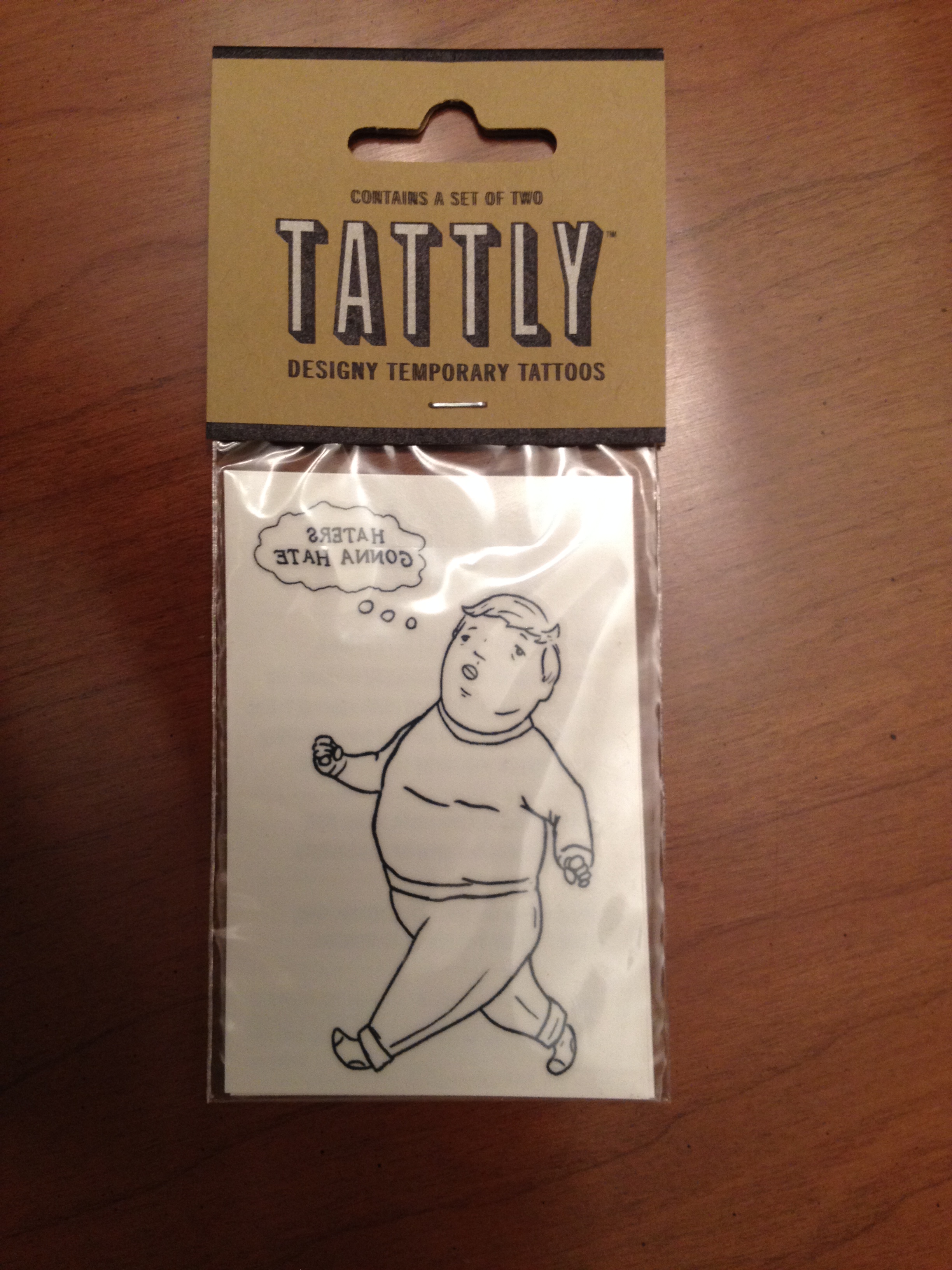

I had mine done permanently, but I’m hardcore.
Not everybody is a hater, though. Some people are just grumpy, and the most beloved of the grumpy is Grumpy Cat. Nobody loves Grumpy Cat more than My Not So Humble Sister. She’s going to be sorry when she sees she missed out on this sweet copy of his book, “Grumpy Cat: A Grumpy Book”.
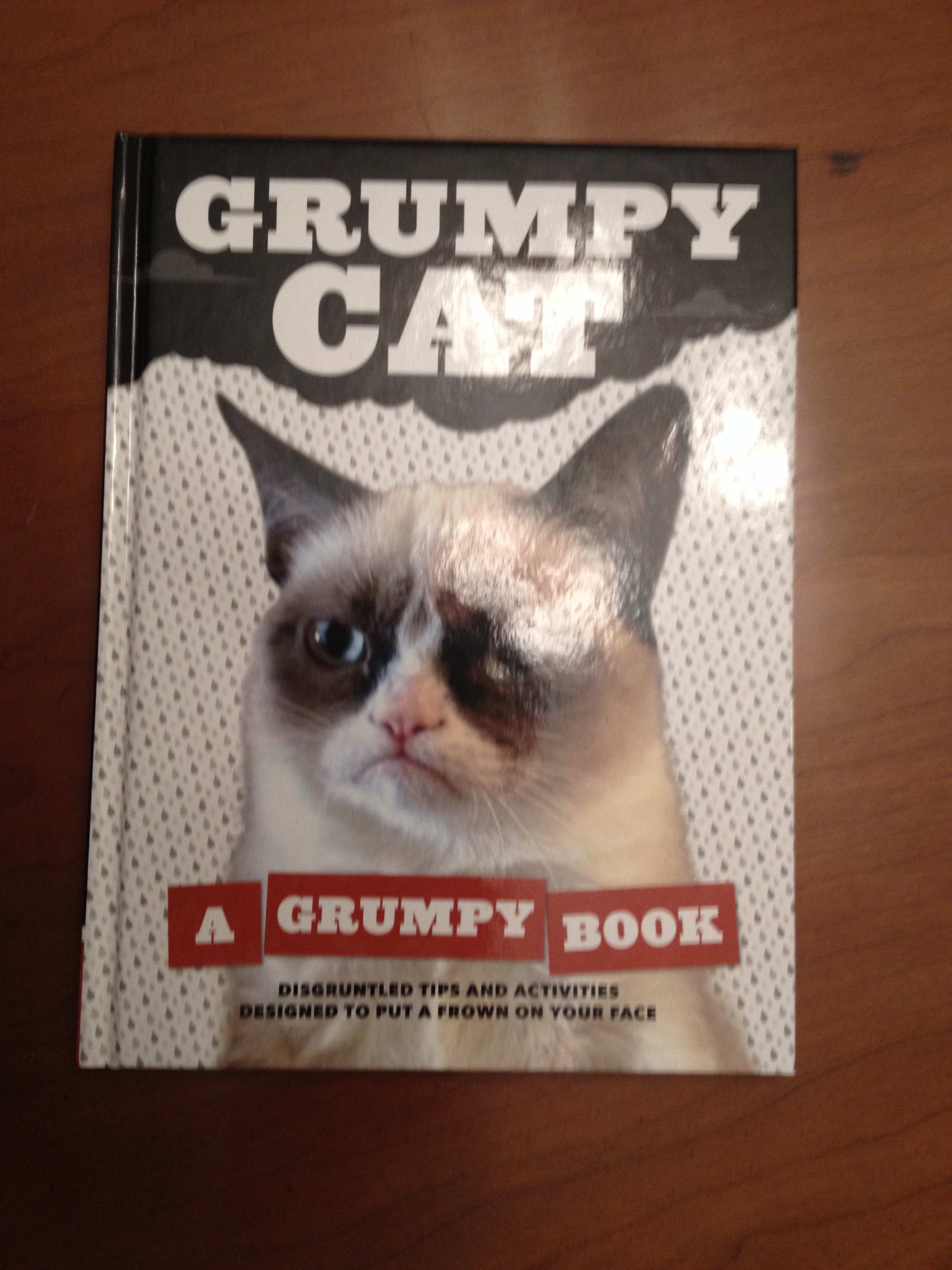

Just to keep things fresh, there’s also a Runaway Monkey Air Freshener included. It’s almost as adorable as Darwin himself.
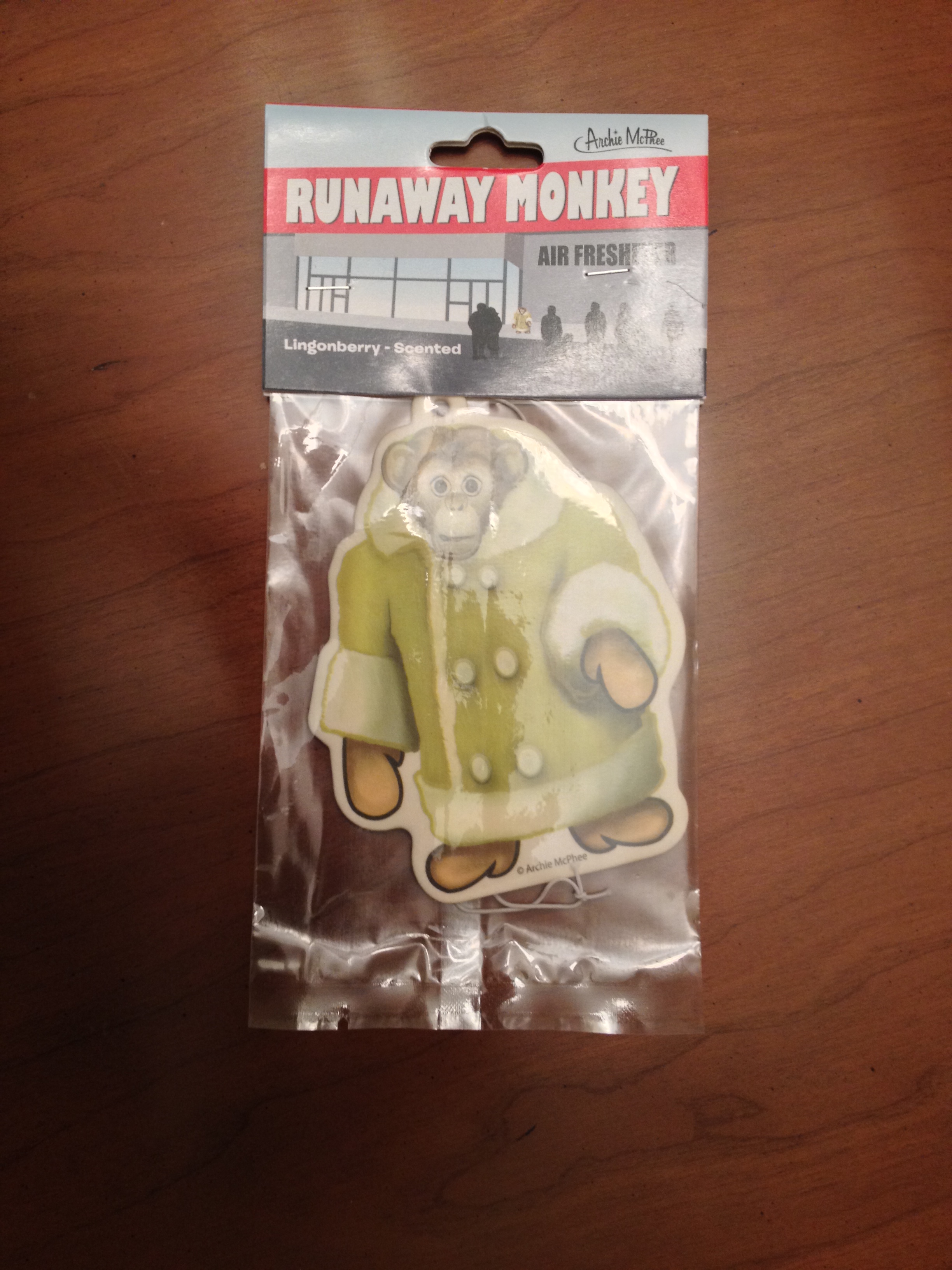
It smells like lingonberry. No, I haven’t opened it. I have no idea what lingonberry smells like. I do know what monkeys smell like. That’s why I haven’t opened it.
Finally, what may be my favorite piece of all, the signature Laughing Squid item: the finger tentacles. Yes, you read that right.

Let the nightmares begin.
I can already think of so many ways to have fun with these, including waking up my Not So Humble Mother the next time she stays over- um, that is, NOT waking up… oh, heck, she’s already read it, no point in going back on it. Well at least I can perfect my Cthulhu impression.

The best selfie I have ever taken.
The internet is a strange place, and I’m a strange guy. And Laughing Squid keeps bringing it right to my door.
Hail to the Who Now?
Posted: October 14, 2013 Filed under: Culture, Musings | Tags: Dan Snyder, DC, football, NFL, Redskins, sports, Washington Leave a commentIn case you don’t follow football, there’s growing controversy over the name of the Washington football team, to the point where some news outlets won’t even print or say the name. (It’s Redskins, for those of you who are unaware.) The controversy is that this name is alleged to be a racial slur and thereby offensive, and there are those who are urging team owner Dan Snyder to change the name to something less offensive. On the other side of the debate you have Dan Snyder who continues to assert there is nothing offensive about the team name, it is a proud tradition, and he will never change the name (his words, not mine).
I find myself a bit torn on this one, although only a bit. The knee-jerk libertarian in me wants to say it’s his team and he can do what he wants with it, and free speech, and yada yada yada, but on the other hand I can understand where the offended parties are coming from and I don’t think Snyder is doing himself any favors. For all I care he can call the team the Hooligans, the Rednecks, or even the Crackers and I wouldn’t be offended, but that’s not the point. It’s not my place to tell people whether or not they should be offended, and it certainly isn’t Dan Snyder’s place either. His continues attempts to defend the team name involve so many logical fallacies it’s hard to list them all, but for starters how about: appeal to emotion, ad hominem (one of Dan’s favorites), bandwagon, anecdotal, and the fallacy fallacy.
There is of course the lawsuit moving forward to revoke the trademark protection for the team name, which some people have argued would force Snyder to change the team name, but then I doubt it. If it was only about money he would have done it a long time ago. For Snyder it’s about power and control. He will do what he wants, when he wants, how he wants, and damn the consequences (if you don’t believe me, ask any Washington football fan). With friends like this the home team doesn’t need enemies, but then it doesn’t much matter, because Dan “Never – you can use caps” Snyder has proven time and again he’d rather lose ten million dollars “proving” he’s right than earn a red nickel admitting he was wrong.
Of course, there is another side to all of this. As My Not So Humble Wife pointed out, it’s a numbers game, and until there are enough people offended to form an army that will march on Washington and threaten to burn down the stadium, Snyder won’t even think about budging. There are also a lot of loyal fans who have a lot of emotion tied up in the team’s identity as well, memories of good times and friends and even loved ones long gone who were bonded with over the team, and that is a powerful force to contend with as well. Simply letting that go because there is a “vocal minority” that is offended is going to be hard for them, and people need to respect that. Simply shouting “you’re wrong!” is never a way to make friends and influence people (or so I have found). Insistence that “if one person is offended, this is something we have to listen” is more likely to make them more defensive and hostile than to bring them around. Better to point out the ways that the Washington team has evolved over its proud history, for example moving away from “Dixie” to “D.C.” in the fight song and finally accepting integration of players.
Talk of being on “the right side of history” is a threat, and threats drive people apart. Maybe it’s time we start talking about how we want to have a team in our nation’s capital that the whole nation can be proud of, and that the entire country will stand to cheer. Hail to you, Washington, whatever your team may be.
 . And be sure to leave a review with your not so humble opinion!

 My Not So Humble Opinion